
 Italiano
 English
 Español
 Français
 Deutsch
 Nederlands
 Português
 Português do Brasil
 Pусский
 日本語
日本語 简体中文
简体中文 한국어
한국어 Bahasa Indonesia
Korytarz Vasariego we Florencji: wycieczki i bilety
Korytarz Vasariego: sekretne przejście we Florencji
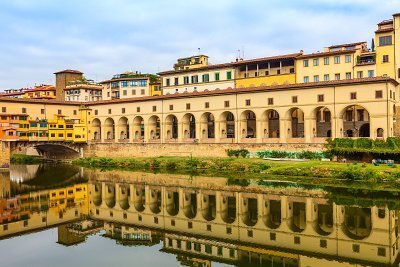
Korytarz Vasariego: tajne podwyższone przejście we Florencji
W 1565 roku Cosimo I de' Medici zapragnął mieć prywatną trasę łączącą jego urzędy rządowe z domem. Zlecił jej budowę architektowi Giorgio Vasariemu. Pięć miesięcy później korytarz był gotowy — 1-kilometrowy podwyższony korytarz biegnący nad dachami od Palazzo Vecchio, przez Galerię Uffizi, nad mostem Ponte Vecchio, aż do Palazzo Pitti po drugiej stronie Arno.
Cosimo nigdy nie musiał stąpać po ziemi. Mógł przemieszczać się między siedzibą władzy a domem, nie spotykając nikogo, bez hałasu i z dala od tłumów. Nie była to tylko architektura — było to oświadczenie o tym, kto rządził Florencją.
Korytarz nad miastem
Spacerując dziś po Korytarzu Vasariego, można podziwiać Florencję z punktu widokowego, do którego większość turystów nigdy nie ma dostępu. Okna wzdłuż Ponte Vecchio wychodzą bezpośrednio na rzekę i otaczające ją wzgórza. Korytarz przebiega przez budynki, nad ulicami i między murami, których mieszkańcy na dole nigdy nie widzieli od wewnątrz.
W korytarzu znajduje się również jedna z największych na świecie kolekcji autoportretów artystów. Na ścianach wiszą ponad 700 portretów, obejmujących okres od XVI wieku do współczesności – od Rafaela i Velázqueza po Ingresa i Ensora. Kolekcja powstała za czasów kardynała Leopoldo de’ Medici w XVII wieku i stale się powiększała, ponieważ artyści włoscy i zagraniczni przekazywali swoje wizerunki. Wiele z tych twarzy nie jest znanych. Niektóre jednak są — obejrzenie autoportretu Rembrandta z bliska, bez typowej dla muzeum odległości, to zupełnie inne doświadczenie.
Osiem lat renowacji
Korytarz zamknięto w 2016 roku. Konieczne było zajęcie się uszkodzeniami spowodowanymi przez wodę, problemami konstrukcyjnymi oraz koniecznością modernizacji systemów oświetlenia i klimatyzacji. Renowacja trwała osiem lat. Ponowne otwarcie miało miejsce w 2024 roku.
Ponowne otwarcie zmieniło wygląd korytarza. Kolekcja autoportretów została zreorganizowana, a niektóre dzieła powróciły po konserwacji. Stare malowane okna zastąpiono takimi, które wpuszczają więcej naturalnego światła, a jednocześnie chronią dzieła. Sama trasa pozostała w dużej mierze niezmieniona — nadal podąża się tą samą ścieżką, którą kroczył Cosimo, przez te same wąskie przejścia i niespodziewane widoki.
Kto go zbudował i dlaczego ma to znaczenie
Giorgio Vasari znany jest przede wszystkim jako autor „Żywotów najsłynniejszych malarzy, rzeźbiarzy i architektów” („Vite degli artisti”), XVI-wiecznej książki, która pozostaje jednym z głównych źródeł wiedzy o renesansowych malarzach i rzeźbiarzach. Był on również praktykującym architektem i malarzem, zatrudnionym bezpośrednio przez rodzinę Medyceuszy. Korytarz był jednym z jego największych zleceń — ukończony w napiętym terminie, pozostaje jednym z najlepiej zachowanych przykładów architektury manierystycznej we Florencji.
Ród Medyceuszy wykorzystywał go zarówno ze względów bezpieczeństwa, jak i ceremonialnych. W mieście, w którym przemoc polityczna nie była rzadkością, posiadanie prywatnej trasy łączącej kluczowe budynki było naprawdę przydatne. Po rodu Medyceuszy korytarz kilkakrotnie zmieniał właścicieli. Korzystała z niego królewska rodzina Sabaudów. W XX wieku został częściowo przebudowany. Mimo to zachowała się podstawowa konstrukcja zaprojektowana przez Vasariego w 1565 roku.
Zwiedzanie korytarza dzisiaj
Wstęp do Korytarza Vasariego wymaga osobnego biletu, niezależnego od biletu do Galerii Uffizi, a liczba zwiedzających na każdą wizytę jest ściśle ograniczona. Nie jest to rodzaj atrakcji, do której można po prostu wejść – trzeba ją zarezerwować z wyprzedzeniem, i to nie bez powodu. Korytarz jest miejscami wąski, a zwiedzanie kolekcji wymaga czasu i uwagi. Grupy są niewielkie.
Większość wycieczek łączy zwiedzanie korytarza z wizytą w znajdującej się poniżej Galerii Uffizi, co ma sens z praktycznego punktu widzenia: najpierw wchodzi się do Uffizi, ogląda stałą ekspozycję, a następnie przechodzi do korytarza. Te dwa doświadczenia wzajemnie się uzupełniają. Uffizi przedstawia instytucjonalną historię sztuki florenckiej; korytarz ukazuje jej prywatną stronę – pokazuje, jak faktycznie żyła i poruszała się po swoim mieście rodzina, która zleciła wykonanie większości tych dzieł.
Jeśli przyjeżdżasz do Florencji specjalnie po to, by obejrzeć kolekcję renesansową, warto dodać do planu zwiedzania Korytarz Vasariego. Nie ma nic lepszego niż stanie nad Ponte Vecchio, patrzenie na autoportret Velázqueza i świadomość, że znajdujesz się w budynku, o którego istnieniu większość ludzi przechodzących poniżej nie ma pojęcia.