
 Italiano
 English
 Español
 Français
 Deutsch
 Polski
 Português
 Português do Brasil
 Pусский
 日本語
日本語 简体中文
简体中文 한국어
한국어 Bahasa Indonesia
Toegangskaarten voor de Galleria degli Uffizi – Zonder in de rij te hoeven staan
Toegangskaarten voor de Galleria degli Uffizi: zo plan je je bezoek
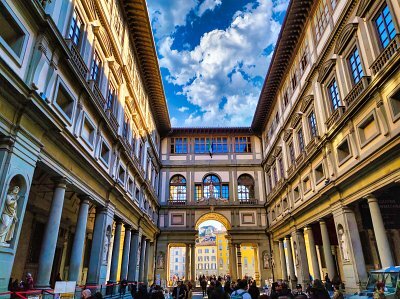
Kaartjes voor de Galleria degli Uffizi: hoe plan je je bezoek?
De Galleria degli Uffizi is het meest bezochte kunstmuseum van Italië en een van de meest bezochte in Europa. Zonder vooraf gereserveerde tickets kan de wachtrij in het hoogseizoen meer dan een uur duren. Met vooraf gereserveerde tickets kunt u direct naar de ingang gaan.
De tickets die hier verkrijgbaar zijn, gelden voor alleen de Galleria degli Uffizi, of in combinatie met toegang tot de Vasari-gang — de 1 kilometer lange, verhoogde gang die in 1565 door Giorgio Vasari werd aangelegd en die het Palazzo Vecchio met het Palazzo Pitti verbindt, hoog boven de daken van Florence. De gang is in 2024 heropend na acht jaar restauratie en kan alleen worden bezocht met een apart geboekt ticket.
De AudioApp
Het combiticket biedt toegang tot een meertalige AudioApp voor zowel de Galleria degli Uffizi als de Vasari-gang. De app is samengesteld door kunsthistorici — het is geen standaard audiotour, maar een inhoudelijke gids bij wat je daadwerkelijk ziet. Je kunt de app op je eigen telefoon gebruiken via een link die je bij je boekingsbevestiging ontvangt.
Dankzij de app kun je in je eigen tempo door het museum lopen zonder live gids, terwijl je toch uitleg krijgt bij de kunstwerken waar je even bij stilstaat. Als je voor Botticelli’s ‘De geboorte van Venus’ staat en wilt begrijpen waar het werk nu eigenlijk over gaat – het mythologische thema, de ongebruikelijke techniek, waarom Venus op deze manier is afgebeeld – dan geeft de app je die uitleg zonder dat je een groep hoeft in te halen.
Een bezoek aan de Galleria degli Uffizi
De Galleria degli Uffizi telt ongeveer 100 zalen, verdeeld over drie verdiepingen. De chronologische opstelling begint met de Italiaanse middeleeuwse schilderkunst – Cimabue en Duccio – en loopt via de 14e en 15e eeuw door naar de hoogrenaissance en uiteindelijk naar de barok. De meeste bezoekers komen voor de Botticelli-zalen op de tweede verdieping. De ‘Primavera’ en ‘De geboorte van Venus’ zijn groter dan veel mensen verwachten, en de details in beide schilderijen zijn in het echt beter zichtbaar dan op welke reproductie dan ook.
In de Leonardo-zaal hangt de Aanbidding der Wijzen, een onvoltooid werk dat hij achterliet toen hij in 1482 naar Milaan verhuisde. Het is een van de meest bestudeerde schilderijen in de collectie — niet omdat het af is, maar omdat de ondertekening en de gedeeltelijke verflaag zijn werkwijze duidelijker laten zien dan de meeste van zijn voltooide werken. Vlakbij hangt de Doni-tondo van Michelangelo, het enige paneelschilderij waarvan bekend is dat hij het heeft voltooid.
Een bezoek aan de Vasari-gang
Als u het combiticket voor de Uffizi en de Vasari-gang boekt, wordt uw toegangstijd voor de gang apart van uw bezoek aan de Uffizi gepland. De aanbevolen volgorde is om twee uur vóór uw tijdvak voor de gang de Uffizi binnen te gaan — dus als uw tijd voor de gang 11.15 uur is, moet u er rekening mee houden dat u om 9.15 uur de Uffizi binnenkomt. Dit geeft u voldoende tijd om de permanente collectie te bekijken voordat de gang voor u opengaat.
De route door de gang omvat de beroemde collectie zelfportretten: meer dan 700 portretten uit de periode van de 16e eeuw tot nu, die langs de gang zijn opgehangen. De ramen boven de Ponte Vecchio kijken rechtstreeks uit op de Arno. De hele ervaring duurt ongeveer een uur.
Je bezoek plannen
De Uffizi zijn op maandag gesloten. Ze zijn de rest van de week geopend, doorgaans van 8.15 uur tot 18.50 uur, hoewel de openingstijden per seizoen kunnen verschillen — raadpleeg het officiële schema voordat je vertrekt. Het museum is aanzienlijk minder druk op dinsdag- en woensdagochtend, en in het eerste uur na opening op elke dag.
Als je van buiten Florence komt, ligt het museum op loopafstand van treinstation Santa Maria Novella — ongeveer 15 minuten lopen door het centrum. Vanaf het station loop je over het Piazza della Repubblica en volg je de borden in zuidelijke richting naar het Piazzale degli Uffizi.
Reserveer je tickets voordat je aankomt. Het museum stelt op de dag zelf wel enkele tickets beschikbaar, maar deze zijn snel uitverkocht en de beschikbaarheid is onvoorspelbaar. Een paar dagen van tevoren reserveren tijdens het tussenseizoen is meestal voldoende; in de zomer is een week of langer van tevoren veiliger.